
Did Heschmeyer Misread the AIT?
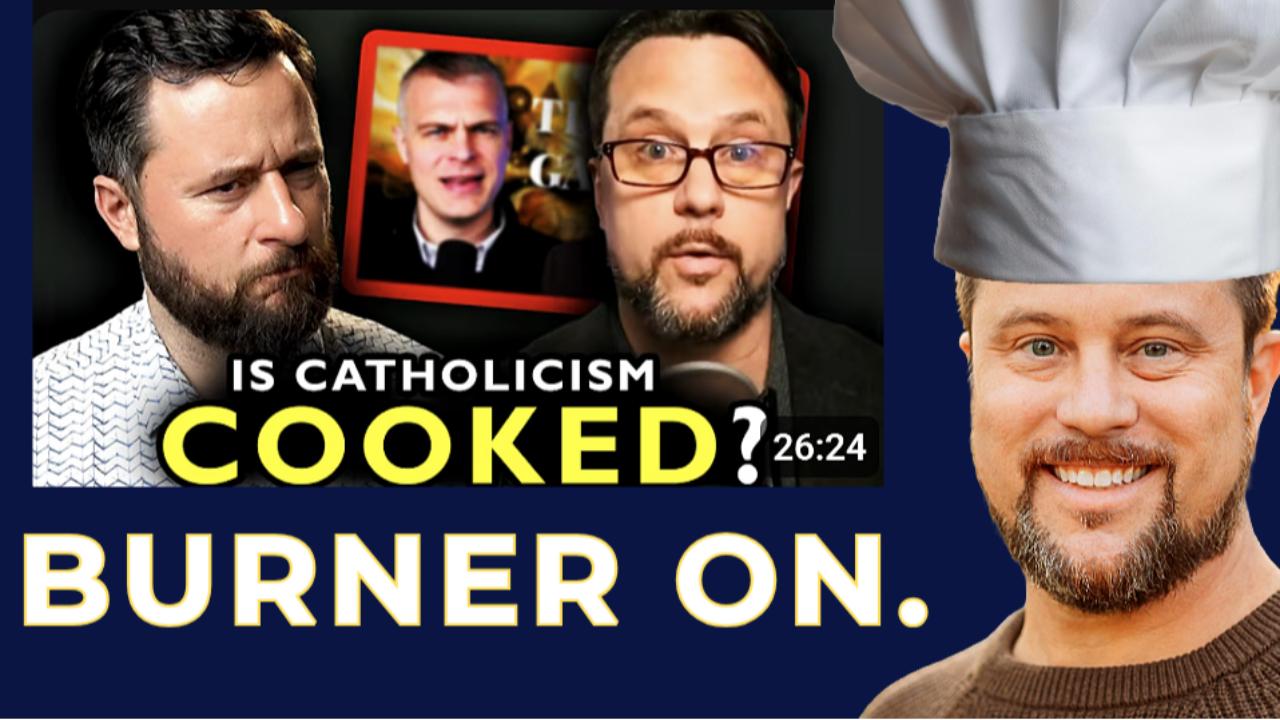
Joe Heschmeyer put out a thoughtful video wrestling with my Attribute Inscripturation Thesis (AIT), the metaphysical engine of my overall defense of sola scriptura. He calls it a "brand new" argument that surprised him. He raises serious questions. He closes graciously.
I think his critique misses what the AIT actually claims. He compressed my argument in ways that cost it its modal precision, its causal mechanism, its scope-restriction, and its kind-correspondence principle. Once those features are back in view, the questions Joe raises start to find their answers.
Part 1 of my reply lays out five distinctions that clarify what the AIT actually claims and what it doesn't. Together they put the actual argument back on the table where the real conversation can happen.
First, the gap between divine attributes and textual properties is metaphysical, not just logical. The AIT delivers three things existing arguments don't. Property-grounding, modal-grounding, and mechanism-specification. The argument that closes the gap works from premises Catholics already affirm.
Second, the AIT is the positive piece of a two-piece argument. It grounds Scripture's textual properties in divine perfections through exemplar causation. The "sola" in sola scriptura comes from a separate disqualification argument that shows no rival source has the same exemplar-causal grounding. Several of Joe's questions assume the AIT is doing the whole job. Once you see it's doing only the positive half, those questions find their answers.
Third, the modal claim takes wide scope, not narrow. The whole conditional is metaphysically necessary, not just the consequent. This is what dissolves Joe's question-begging charge. On the narrow-scope reading he attributes to me, the inference does beg the question. The wide-scope reading the AIT actually claims doesn't.
Fourth, the AIT trades on exemplar causation specifically, not generic supervenience. Two tiers of perfections do two different kinds of work. Communicative perfections determine communicative properties. Metaphysical perfections determine positional standing. The mapping between perfections and properties is many-to-many.
Fifth, kind-correspondence respects what each perfection governs. A turnip isn't a communicative act. The communicative perfections don't apply to it along the relevant dimensions. The turnip parody works against generic supervenience. It fails against the actual AIT.
Once all five distinctions are on the table, the AIT generates a single diagnostic question for every Catholic objection. Which divine perfection failed?
I work through these five distinctions in detail in two places.
Part 2 of the reply is coming soon, where I work through Joe's six specific objections one by one. Subscribe to The Protestant Review on Substack so you don't miss it.
Joe pressed at the right places. The AIT survives the press, and the conversation gets sharper for it.